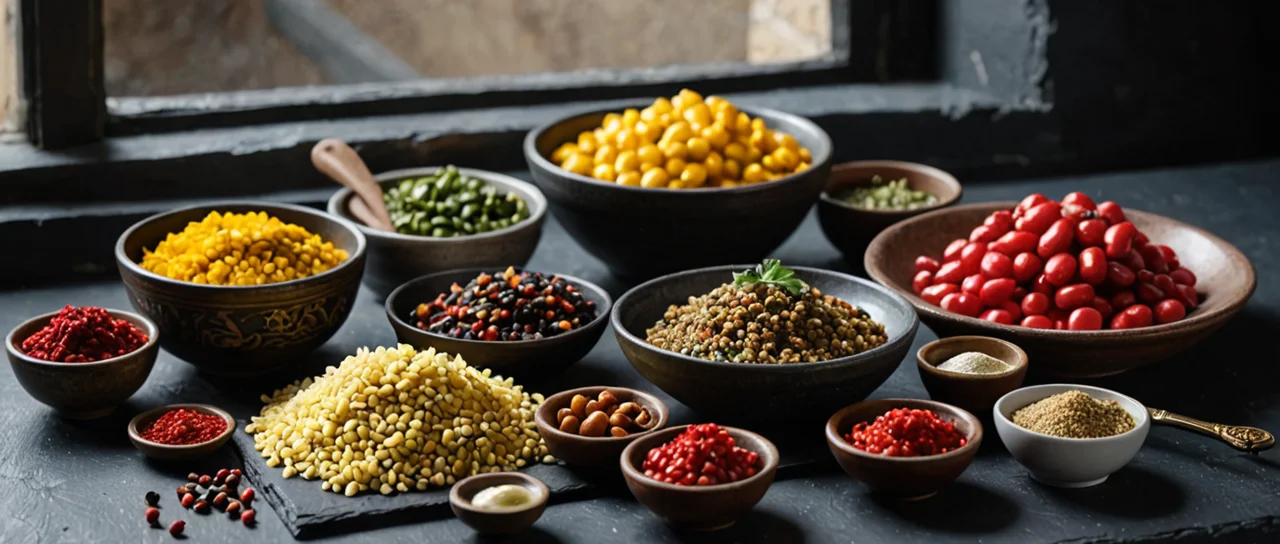
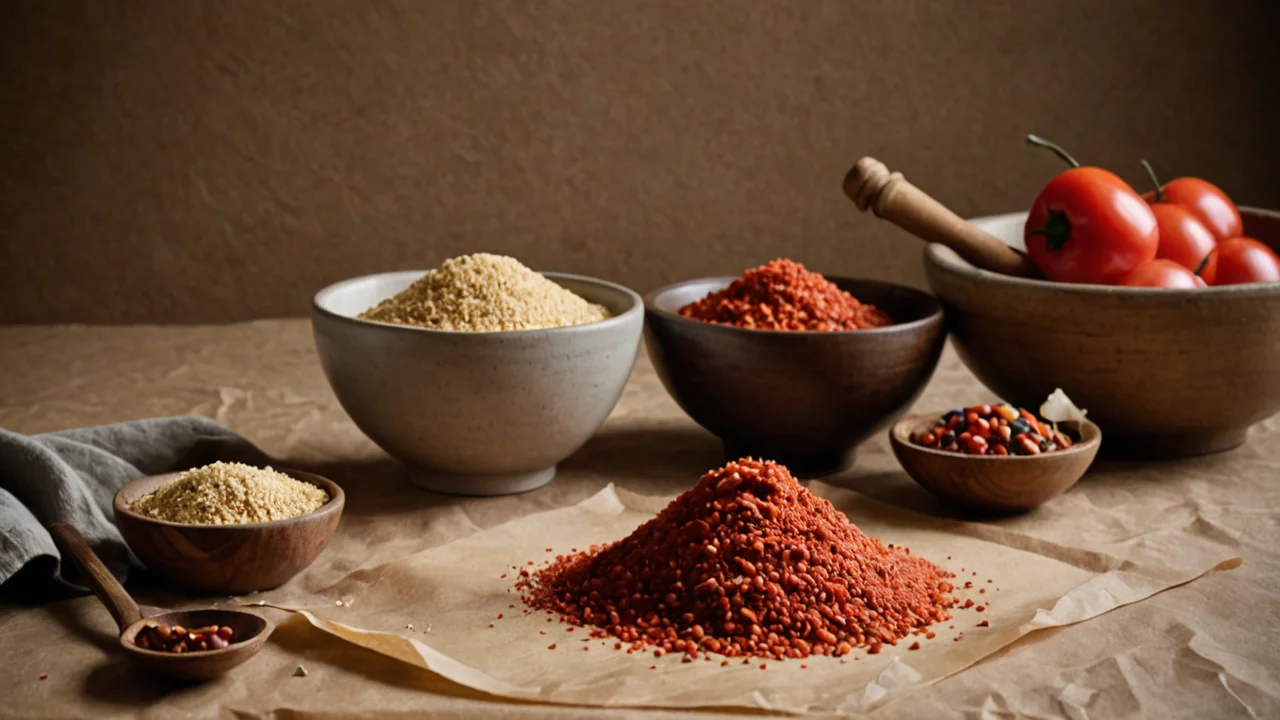
Pairing in Middle Eastern cooking runs on three levers — fat, acid, and aroma — and almost every decision you make at the counter or the stove is one of those three being pushed or pulled back. Get the fat right and the dish tastes rich; add acid and it tastes alive; layer the aromas in the right order and it tastes like the region rather than like a marinade. The rest of this page works through those levers in the order a cook actually meets them: what goes into a marinade, how a dough or a batter is built, what sits on the plate beside the main dish, and where the food-safety lines fall.
What the marinade is actually doing to the meat
Yogurt, lemon, garlic, and oil form the backbone of most Levantine meat marinades, and each one has a job that a substitute will only partly do. Yogurt is mildly acidic and thick: it clings to the surface, carries crushed garlic and spices into the crevices of a butterflied chicken breast or a sliced leg, and its lactic acid tenderizes gently enough that an overnight soak doesn't turn the outside of the meat to mush. Lemon juice is harsher and faster. Use it as a finisher or in a short marinade measured in hours, not overnight, unless the cut is tough enough to need the punishment. Oil — olive in the north, neutral sunflower in much of the shawarma trade — is the carrier that lets fat-soluble spice compounds (the piperine in black pepper, the pigments in paprika) actually reach the meat, and it keeps lean chicken from drying against dry heat.
The sequence matters more than the exact recipe. Salt first and early: it draws moisture out, dissolves, and reabsorbs into the muscle, seasoning the meat from the inside. Then the acid and the aromatics, then the oil last to seal the surface. If you dump everything in at once, the oil coats the meat and the salt and acid have to fight through it. Crushed garlic should go in with the acid, not the oil, because garlic's pungency is water-soluble and the acid keeps it from turning bitter and acrid as it sits. Fresh herbs — parsley, cilantro, mint — go in late, close to cooking, or they blacken and taste like lawn clippings.
What this costs you is time and refrigerator space, and it's worth being honest about that. A yogurt marinade needs at least a few hours and ideally overnight; a lemon-and-oil one can be done in under an hour and is the right call for a weeknight. The trade-off is depth: the long yogurt marinade gives you the tangy, tender interior that a proper shawarma has, and the quick one gives you surface flavor only. If you're cooking chicken to the safe internal temperature of 165 °F (74 °C) measured at the thickest part, you're already pushing the meat toward dryness, and the yogurt's moisture-holding capacity is doing real work against that. Skip it and you'll notice.
The vertical rotisserie problem, and how to fake it
Shawarma is defined by the rotisserie: thin slices of marinated meat — lamb, beef, or chicken — stacked on a vertical spit, roasted slowly as the outside browns, and shaved off in crisp-edged ribbons that go into flatbread with sauces, vegetables, and pickles. The home cook almost never has that spit, and the honest answer is that you cannot fully reproduce it. What you can reproduce is the logic: meat that has been heavily marinated, cooked in a stack so the outer layer crisps while the inner stays juicy, and sliced thin against the grain.
The closest home method is a tight stack of thin-sliced marinated chicken or lamb pressed onto a skewer or into a loaf pan and roasted hot, then finished under the broiler to crisp the surface and shaved off in strips. Some cooks freeze the marinated stack briefly to firm it so the slices come off clean. The result is a good sandwich and a recognizably different one from spit-roasted shawarma — the meat is more uniformly cooked and less contrast between charred edge and tender center. That's the trade-off, and pretending otherwise doesn't help anyone. What you keep is the marinade, the shave, and the assembly, and those are most of the flavor.
Chicken is the most forgiving choice for the home version because it's lean and takes the marinade quickly. Whatever the method, the safety line is the same: 165 °F (74 °C) at the thickest part. Cook to that and no further if you can help it; the shave-and-crisp finish will add color without cooking the interior past done. And once it's cooked, the clock starts — perishable food like chicken shawarma shouldn't sit out at room temperature for more than 2 hours between 40 °F (4 °C) and 140 °F (60 °F), and that window shrinks to 1 hour if the room is above 90 °F (32 °F). A summer cookout is exactly where people get this wrong, because the food is out for grazing and nobody's watching the clock.
Building falafel: the batter is a hydration decision
Falafel is ground pulses — usually chickpeas or fava beans — mixed with herbs and spices, formed into balls or patties, and deep-fried. The single decision that determines whether it works is whether the pulses are soaked or cooked. They must be soaked, raw, and dried thoroughly before grinding. Cooked or canned chickpeas make a batter that is too wet and too soft; it falls apart in the oil and comes out greasy and dense rather than crisp-shelled and fluffy inside. This is the mistake almost everyone makes once, and you'll know it the moment the first ball disintegrates and clouds the oil with grit.
Soak the dried chickpeas overnight, drain them, and dry them well — spread on a towel, patted, left to air for a while. Then grind with onion, garlic, parsley, cilantro, cumin, coriander, salt, and a little baking powder or soda, which gives the interior a lift as it fries. The mixture should hold together when squeezed but crumble when you press it hard. If it's too loose, a spoon of flour or a pulse or two of chickpea flour tightens it; if it's too wet, you didn't dry the chickpeas enough. Fry at a steady high heat so the shell sets before the inside steams through.
The payoff is a genuinely nutritious fritter: home-prepared falafel runs about 13.3 g of protein per 100 g and 333 kcal per 100 g. That's a real protein contribution from a plant source, though it's also a fried food, so the calorie figure is the one to keep in mind if you're serving it as a main rather than a mezze nibble. The cost of the traditional method is planning — the overnight soak is non-negotiable — and the mess of deep-frying. A shallow fry in a heavy pan works and uses less oil, at the price of a slightly less even crust and a flatter shape. Baked falafel is possible and is a different food: drier, more crumbly, and much less forgiving of a wet batter.
The mezze table: acid, herbs, and contrast
A mezze spread is built on contrast, and the pairing rule is that no two dishes should hit the same note. Hummus is rich and earthy — it wants lemon, good olive oil, and something sharp beside it: pickled turnip, a scatter of sumac, raw onion. Muhammara is sweet-sour from pomegranate molasses and wants cool, plain things next to it. Tabbouleh is mostly parsley and lemon and is the acid; baba ghanoush is the smoke and the fat. If you put three creamy dips on the table, the meal goes flat, and the fix isn't more of anything — it's a dish of pickles and a bowl of olives.
Salt and acid are the two things home cooks underdo in this cooking. The pickles on a shawarma plate aren't garnish; they're the acid that cuts the fat of the meat and the sauce, and the same logic puts lemon on grilled fish, sumac on onions, and pomegranate molasses in a stew. When a dish tastes flat and you can't say why, reach for lemon and salt before anything else, in that order. Herbs are the third lever: flat-leaf parsley and cilantro are used in volume, as a vegetable rather than a sprinkle, and they lose their punch if chopped too far ahead — chop them close to serving and keep them dry until then.
The limit of the contrast rule is that it's a guide, not a law. Some dishes are meant to be rich and unctuous all the way through — a slow-braised lamb with dried fruit is sweet and fatty and doesn't want a sharp pickle fighting it. Where the rule earns its keep is at a table with many small plates, where the palate is moving from dish to dish and needs a reset between them.
Sweets, nuts, and where the butter goes
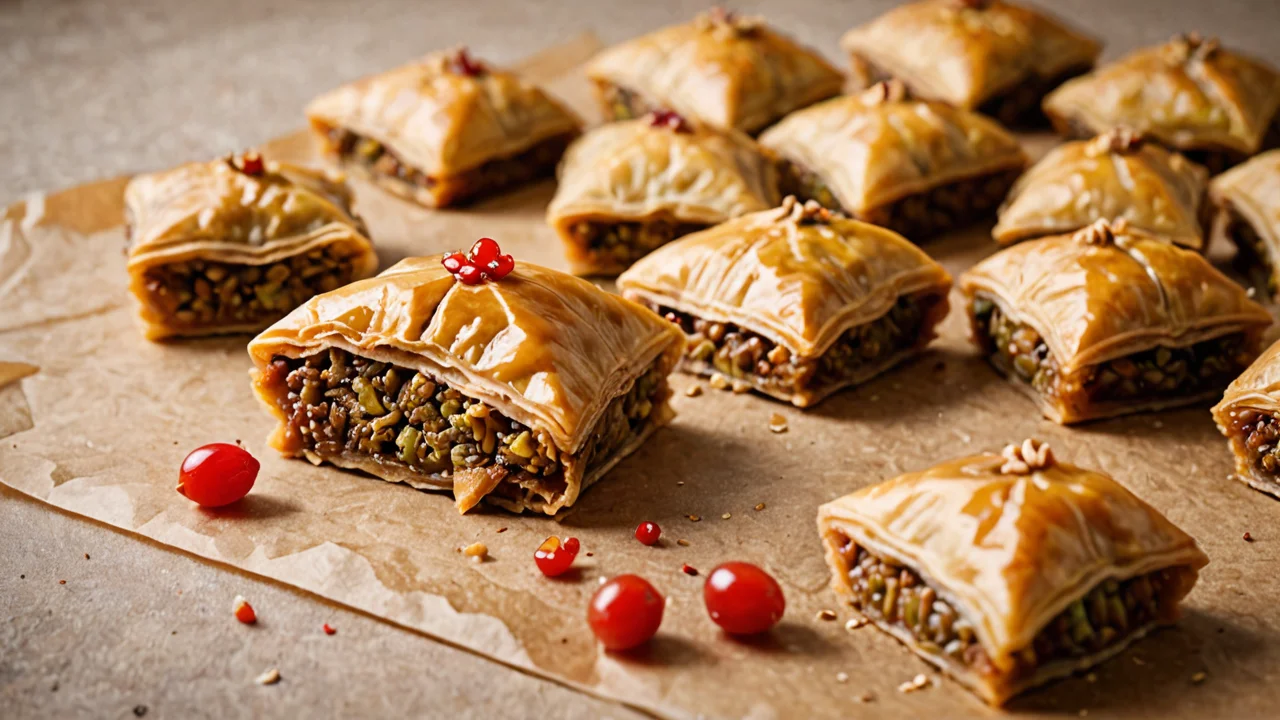
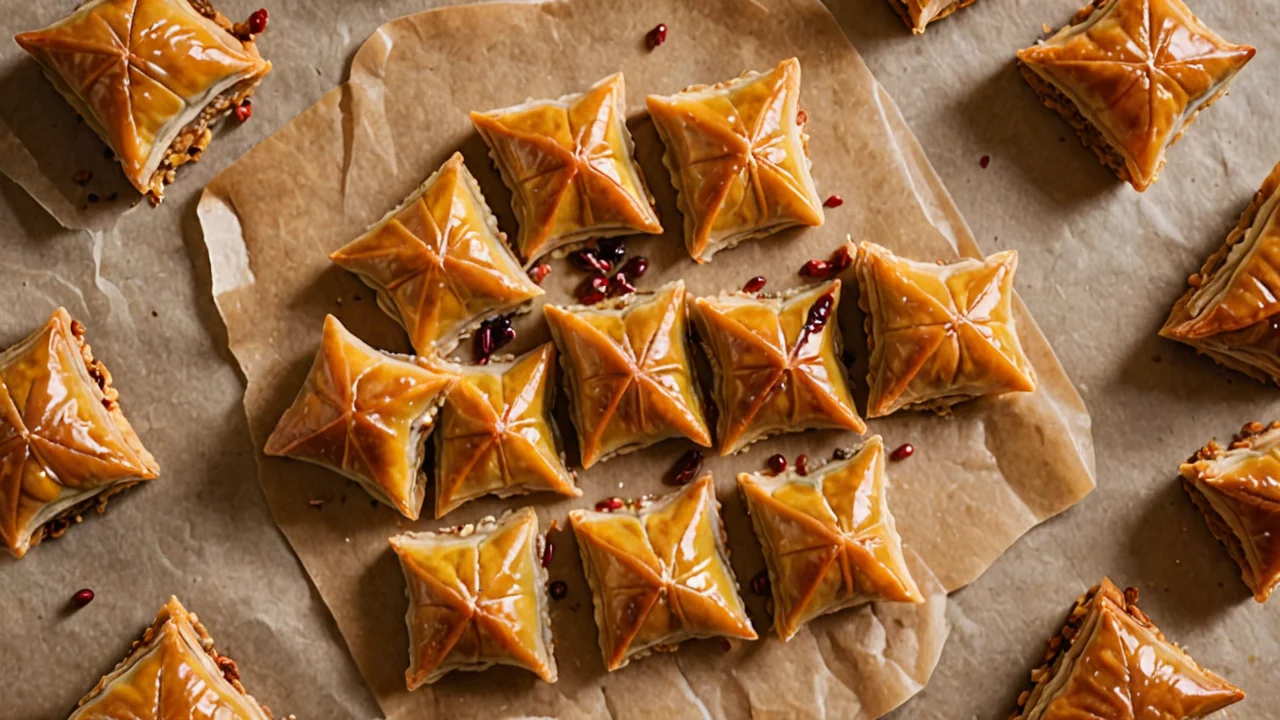
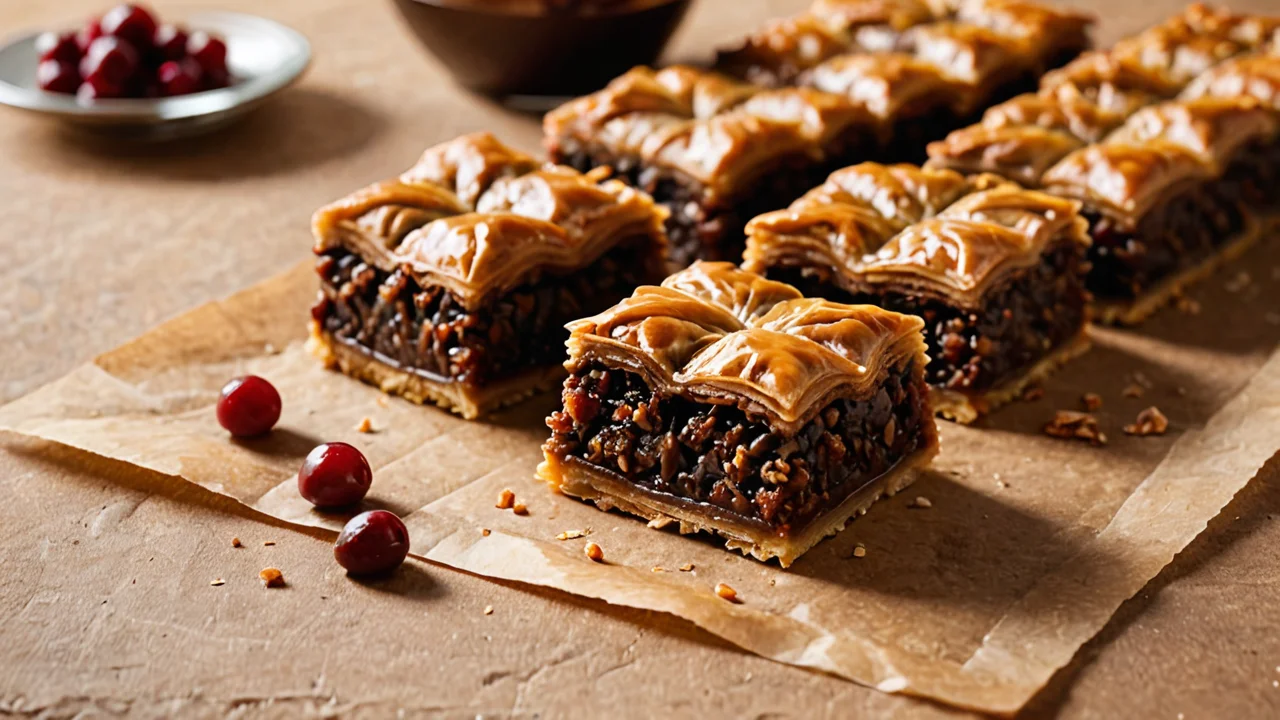
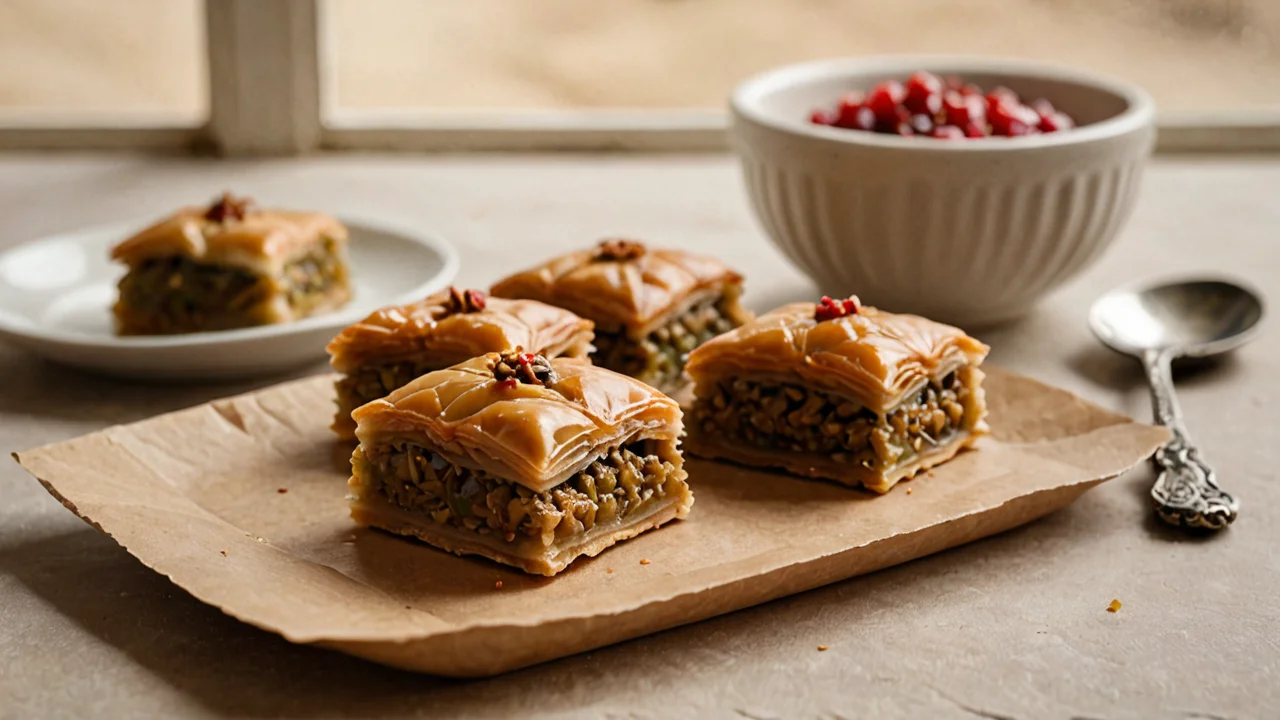
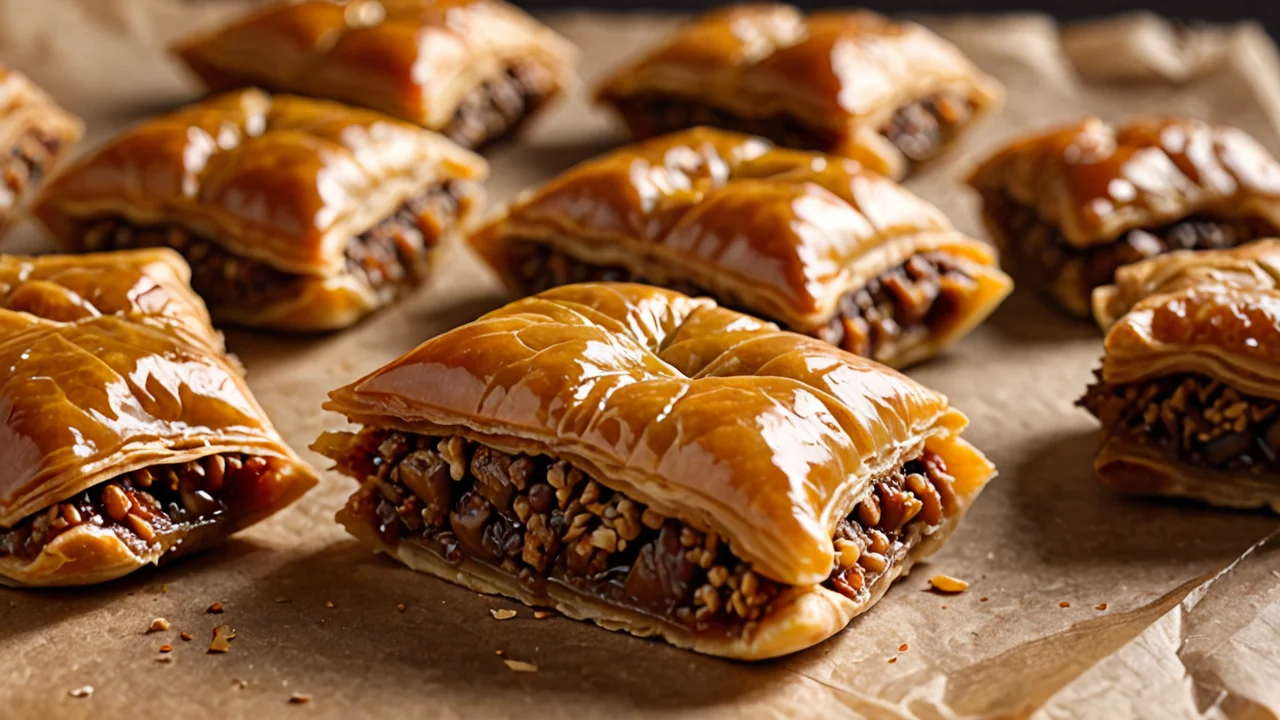
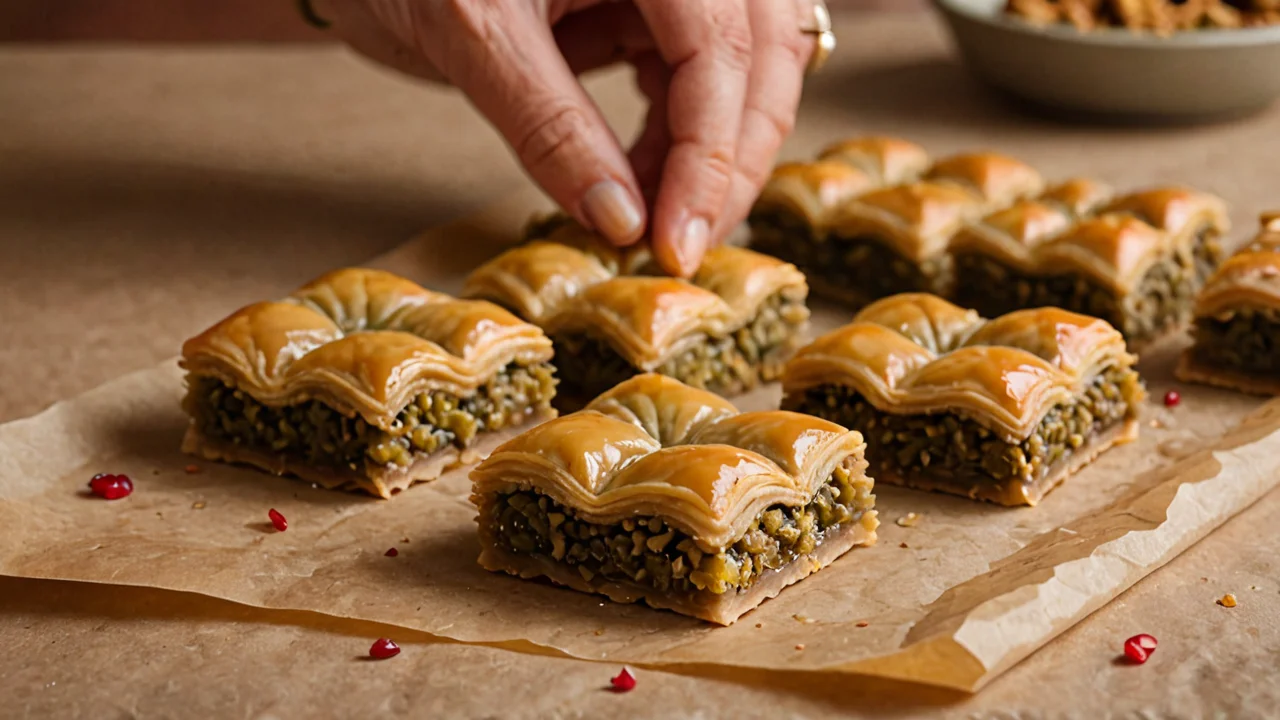
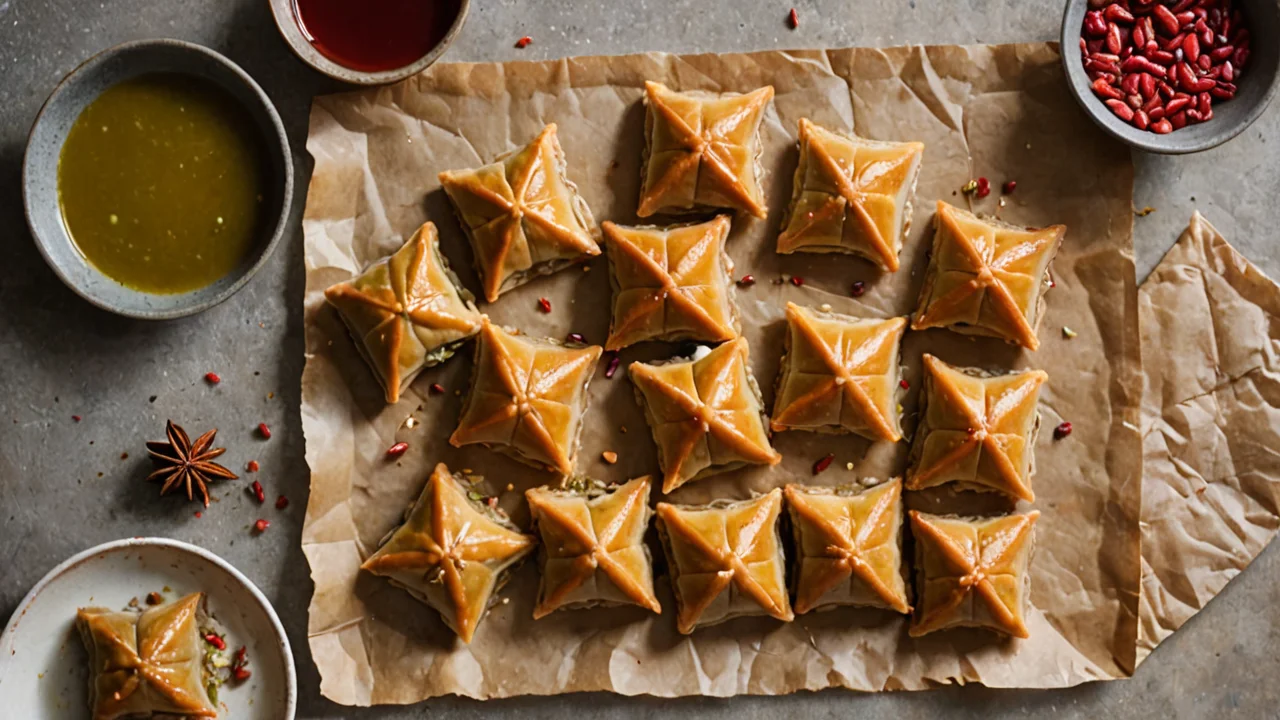
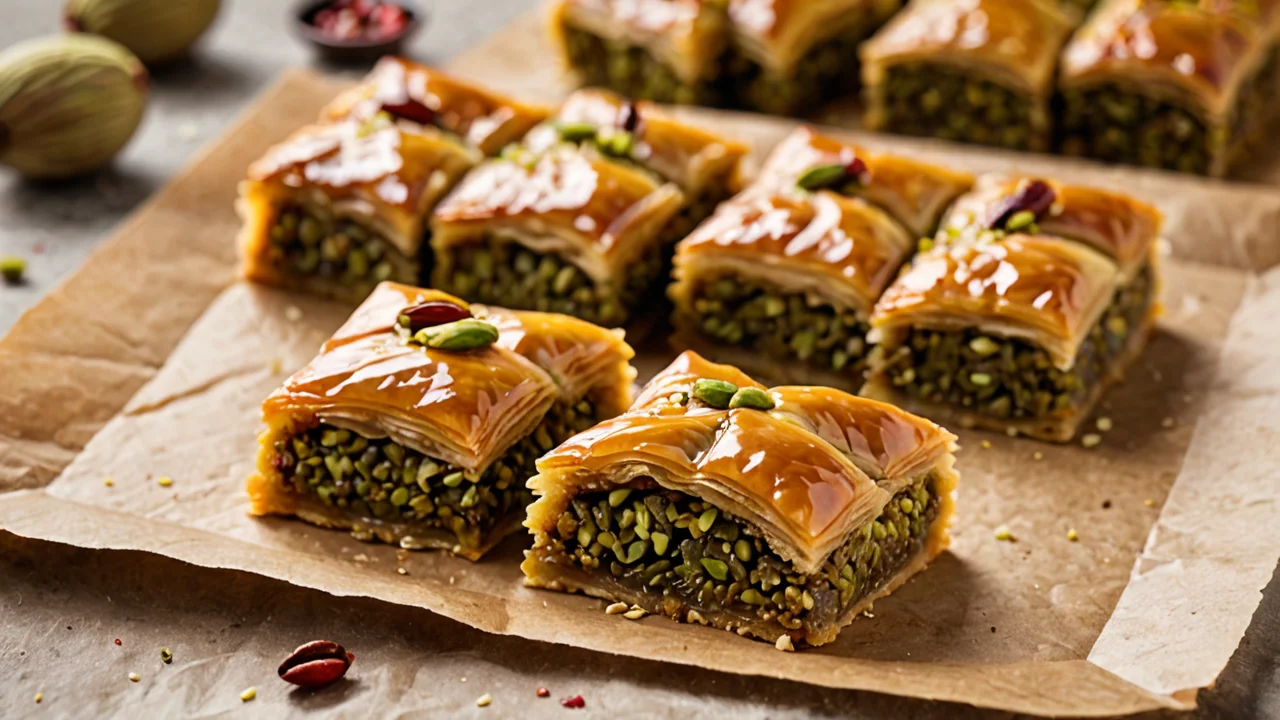
Baklava is phyllo, nuts — often walnuts or pistachios — and a syrup or honey, and its quality comes down to two things: how thin and how dry the phyllo is, and how the syrup meets the pastry. The layers are brushed with melted butter (or clarified butter, which has a higher smoke point and less water), built up in many thin sheets, filled with finely chopped nuts, and baked until deeply golden before the syrup goes on. Syrup on hot pastry and pastry on hot syrup both work; syrup on a cooled pastry gives a crisper result, syrup on hot gives a softer, more soaked one. That's a texture choice, not a correctness one.
The nuts and butter make it a perishable food, which surprises people who think of pastry as shelf-stable. It should be stored cold — at or below 40 °F (4 °C) for safe cold storage — and brought back to room temperature before serving so the butter softens and the layers separate again. Left in a warm kitchen for a day or two, the butter goes rancid and the nuts turn stale, and you'll taste it as a flat, slightly soapy note under the honey. The trade-off is that refrigeration dulls the aroma; a short rest at room temperature before serving fixes that.
The same logic governs other nut-and-butter sweets in the region — ma'amoul, nut-filled cookies, anything with a perishable filling. The pastry itself keeps; the filling is what dates it. Make them in the quantity you'll eat within a few days, or freeze them well wrapped and thaw overnight in the refrigerator rather than on the counter.
Order of operations, and the mistakes that actually ruin a dish
If you take one sequence away from this, take this one: season the protein early and let it sit, build the acid and aromatics into the marinade, cook to temperature rather than to time, and add fresh herbs and a final squeeze of lemon at the end. Everything else is variation. The mistakes that actually ruin food are not exotic — they're a wet falafel batter hitting the oil, a chicken shawarma pulled off the heat at the wrong internal temperature and left out too long, a baklava stored in a warm cupboard, a marinade left so long the acid has turned the meat to paste at the edges.
The trade-offs are real and worth naming. The traditional methods cost time — overnight soaks, long marinades, slow roasting — and the shortcuts cost texture and depth, not safety, as long as you keep to the temperature and time limits. A quick lemon-and-oil marinade on chicken cooked to 165 °F (74 °C) and served within the safe window is a perfectly good weeknight dinner; it just isn't shawarma, and knowing the difference is what lets you choose. The cook who understands why the yogurt is there, why the chickpeas must be raw, and why the pickles belong on the plate can improvise in the right direction. The cook who follows a recipe without those reasons can't tell when something has gone wrong until it's on the table.
| Ingredient or step | What it contributes | What it costs |
|---|---|---|
| Yogurt marinade | Tenderness, tang, moisture retention | Hours to overnight; fridge space |
| Lemon juice | Brightness, fast tenderizing | Overuse turns meat mushy at the edges |
| Dried, soaked chickpeas | Crisp-shelled, fluffy falafel | Overnight soak; drying time |
| Canned chickpeas | Speed | Batter falls apart; greasy result |
| Pickles and sumac | Acid to cut fat | Nothing but a jar in the fridge |
| Cold storage for nut pastries | Slower rancidity, food safety | Dulls aroma; needs a rest before serving |