Dessert in the Middle East is not a separate course tacked onto the end of a meal — it is a parallel tradition with its own logic, its own techniques, and its own rules about when and how it is served. The single most useful thing to understand before you cook any of it is that the region's sweets divide into two families that behave almost nothing alike: syrup-soaked pastry and nut confections on one side, and dairy-thickened puddings, grain-based sweets, and fried dough on the other. Everything else — which flour, which nut, which syrup, how long it keeps — follows from which family you are in. The second most useful thing is that most of the failures home cooks hit are not flavor failures. They are texture failures, and they are almost always caused by temperature or timing, not by ingredients.
The two families of Middle Eastern sweets, and why the distinction matters before you shop
Learn to sort a dessert into the pastry-and-syrup family or the dairy-and-starch family before you buy anything, because the two demand opposite working conditions. Pastry-and-syrup sweets — baklava and its relatives, layered phyllo with nuts and a honey or sugar syrup — are a dry-work problem. The dough must stay dry, the layers must stay separated, and the syrup goes on at the end, and the temperature of the syrup relative to the pastry is the whole ballgame. Dairy-and-starch sweets — milk puddings, semolina cakes, rice puddings, and the fried dough and syrup combinations that show up across the region — are a wet-work problem. You are managing starch gelatinization and the risk of scorching, and the texture is set by how you stir and how fast you cool.
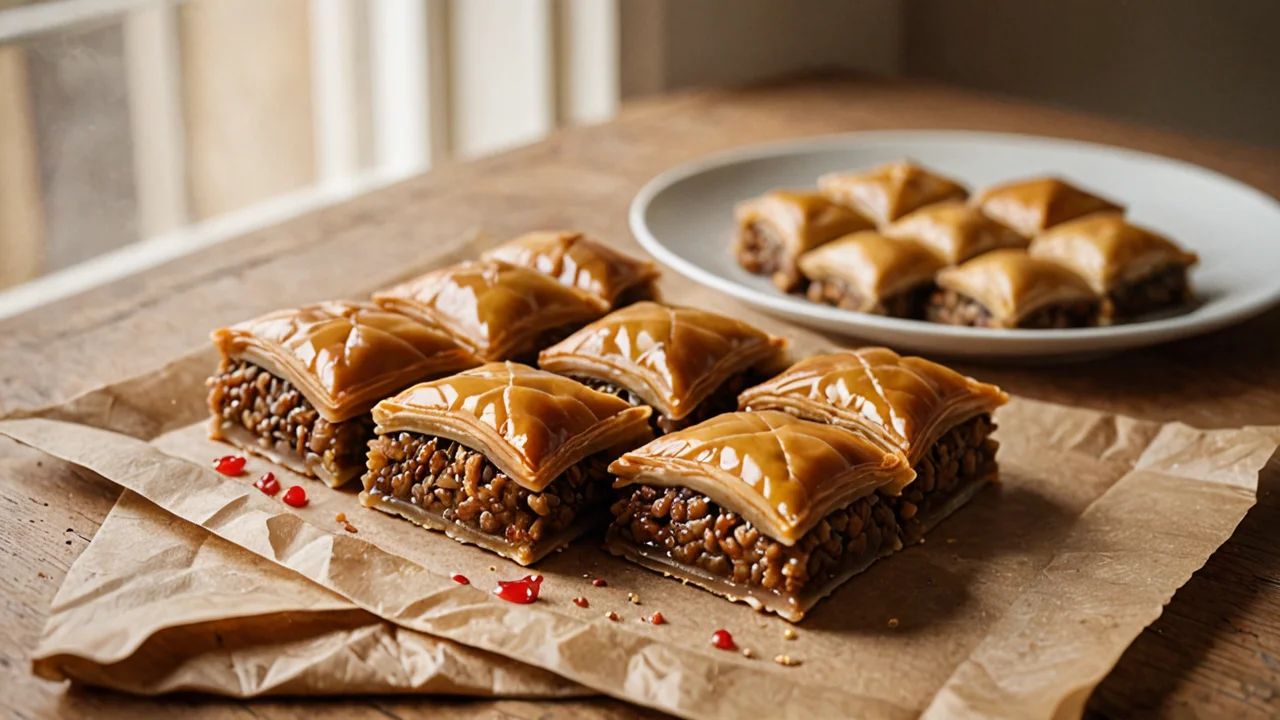
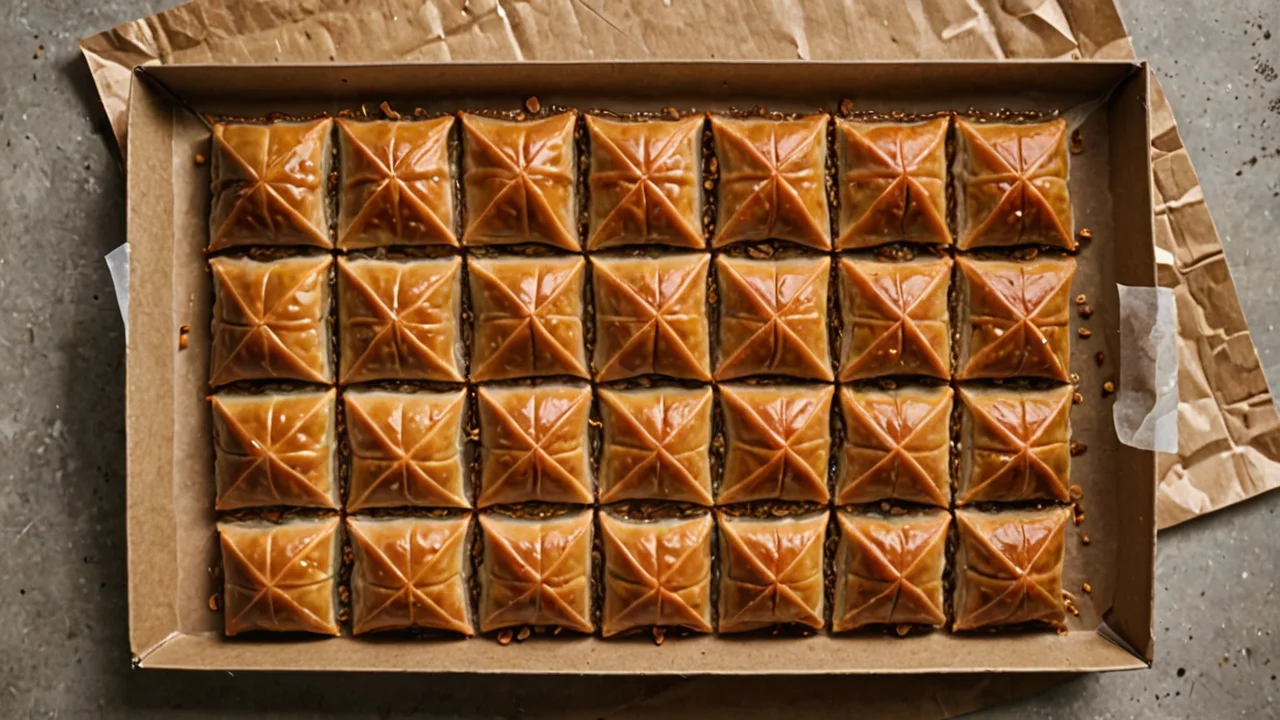
Baklava is the reference point for the first family: thin sheets of phyllo, nuts — often walnuts or pistachios — and a sweet syrup or honey, layered and baked. Get the layering right and it shatters; get it wrong and it goes leathery. That leatheriness is the tell. When baklava comes out tough rather than crisp, the cause is nearly always that the butter between sheets was insufficient or the pastry sat and absorbed steam before the syrup went on.
The dairy-and-starch family is more forgiving on assembly but less forgiving on heat. A semolina cake or a milk pudding will tell you immediately if you rushed it — lumps, a raw starch taste, a skin on top — and those faults cannot be fixed after the fact. The trade-off is real: pastry work is fussy and demands a dry room and a steady hand, while pudding work demands constant attention at the stove but almost no precision in assembly. Choose your project by which kind of attention you actually have that day.
Fried dough and pulses: where the savory edge of the dessert table comes from
Some of the most common sweets on a Middle Eastern table are fried, and the frying is what makes or breaks them. Falafel is the clearest example of the savory-adjacent end of this: a Middle Eastern food made from ground pulses, usually chickpeas or fava beans, mixed with herbs and spices, formed into balls or patties and traditionally deep-fried. It is not a dessert, but it belongs in any discussion of the region's fried-and-dipped tradition because the same oil management and the same dough-hydration instincts apply to both the savory fritters and the sweet fried doughs served with syrup.
The numbers on falafel are worth knowing because they surprise people who assume a bean fritter is light: home-prepared falafel runs about 333 kcal per 100 g serving with 13.3 g protein per 100 g. That is a dense food. The density comes from the pulses themselves and from what the frying oil does to the surface. It also explains a common failure: falafel made from cooked or canned chickpeas instead of soaked raw ones will fall apart in the oil, because the starch has already gelatinized and there is nothing left to bind. The mixture should be ground from soaked, uncooked pulses, and it should be cold and rested before it hits the oil.
Oil temperature is the other lever. Too cool and the fritter drinks oil and goes greasy before the center sets; too hot and the outside darkens while the inside stays raw and pasty. You notice greasiness on the paper towel — a heavy translucent ring rather than a few droplets — and that is your signal to bring the oil back up before the next batch. Fry in small batches for exactly this reason: a crowded pan drops the oil temperature and you get the greasy result across the whole batch instead of one fritter.
The honest limitation here is that deep-frying at home is a commitment — oil quantity, smell, disposal — and the results are best within minutes of coming out of the pot. If you are making these for a table that will sit and graze, the fried items should be the last thing you cook, not the first.
Shawarma and the savory anchor: what the dessert course is built around
You cannot plan a Middle Eastern dessert course without knowing what precedes it, and shawarma is the dish most people picture. Shawarma is a Middle Eastern dish of thin slices of marinated meat — commonly lamb, beef, or chicken — stacked on a vertical rotisserie, slowly roasted and shaved off to serve in bread with sauces and vegetables. Chicken shawarma is that same preparation made from marinated chicken, shaved and typically served in flatbread or pita with sauces, vegetables, and pickles.
The reason this matters for dessert planning is weight. A shawarma sandwich is rich, salty, and acidic from the pickles, and it sets up a specific kind of after-dinner appetite: something sweet and cool, or something sweet and very crisp, rather than another heavy plate. That is why the pastry-and-syrup family and the cold dairy puddings dominate the dessert table after a shawarma meal. A dense, buttery cake would be too much; a shatteringly crisp piece of baklava with a small glass of tea is exactly right.
The food-safety facts around shawarma are the ones home cooks most often get wrong, and they are non-negotiable. Poultry must reach a minimum safe internal cooking temperature of 165 °F (74 °C), measured at the thickest part. And perishable foods like chicken shawarma cannot sit out indefinitely: no more than 2 hours between 40 °F (4 °C) and 140 °F (60 °C), reduced to 1 hour if the ambient temperature is above 90 °F (32 °C). If you are planning a long grazing table with shawarma at one end and sweets at the other, those two hours are your real clock for the whole spread — the dessert does not get extra time just because it is at the other end of the table.
If you are making shawarma at home without a vertical rotisserie, the trade-off is browning. A home oven or a stacked skewer will cook the meat through safely but will not give you the crisp, caramelized exterior that shaving off a rotating cone produces. You can approximate it by finishing the meat under a hot broiler in thin layers, but you lose the juiciness that comes from the slow rotation. It is a reasonable compromise; it is not the same dish.
Syrup, honey, and the temperature rule that decides whether baklava shatters or sogs
Pour syrup onto hot pastry or cold syrup onto cold pastry, never cold onto hot. That single rule explains most baklava that comes out limp. The mechanism is straightforward: hot pastry and hot syrup have similar, low viscosity, so the syrup soaks in gradually and the layers stay distinct as the whole thing cools. Cold syrup hitting hot pastry sets up a temperature gradient that draws liquid into the layers unevenly, and you get a soggy bottom with a dry top. The traditional sequence is to bake the pastry until deeply golden, then pour syrup that is still warm over it while it is still hot, and then — this is the part people skip — let it sit undisturbed for hours so the syrup distributes and the structure sets.
Baklava and its nut-and-butter relatives are also a cold-storage food once made. Ready-to-eat foods such as baklava containing nuts and butter should be held at or below 40 °F (4 °C) for safe cold storage. That matters more than most people expect, because nuts and butter are both prone to going rancid at warm room temperature, and a tray of baklava left on the counter for a day will taste flat and slightly stale even though nothing has visibly spoiled. The cost of refrigerating is that the pastry loses its crispness — cold storage pulls moisture into the layers. The fix is to bring it back to room temperature, uncovered, before serving, and to accept that day-two baklava is a different, softer pleasure than day-one.
Honey behaves differently from sugar syrup and deserves its own warning. Honey is already thick and its sugars are already inverted, so it penetrates faster and browns faster. A honey-soaked pastry needs a shorter bake at a slightly lower temperature than a sugar-syrup version, or the edges will darken before the center is done. The trade-off for using honey is flavor — deeper, more floral, more complex — against a narrower margin for error on the bake.
Dairy, semolina, and the puddings that punish impatience
Milk puddings and semolina sweets are where home cooks most often end up with a texture they did not intend, and the cause is almost always heat management rather than the recipe. Starch-thickened dairy needs to come up to temperature slowly and be stirred constantly, because the moment starch granules settle on the bottom of the pan they scorch, and scorched milk cannot be rescued — the burnt note permeates the whole batch. A heavy-bottomed pan and a lower flame cost you time and buy you the entire dish.
The other failure mode is the skin. As a milk pudding cools, proteins and starch at the surface set into a film. Some traditions want that skin; most do not. Pressing plastic wrap directly onto the surface while it cools prevents it, at the cost of a slightly softer top layer. Stirring periodically as it cools gives you a more uniform texture but a less clean surface. Pick one deliberately.
Semolina sweets sit between the pudding family and the pastry family, and they are the most forgiving entry point for someone new to the region's desserts. The grain gives you structure without the fragility of phyllo, and the syrup is poured over a baked or fried base the same way it is for baklava, so you learn the hot-on-hot rule in a lower-stakes setting. The limitation is that semolina has a distinct coarse texture that some palates find grainy; if that bothers you, a finer grind or a blend with regular flour will smooth it, at the cost of some of the chew that makes the sweet distinctive.
Planning the dessert table: sequence, quantities, and what to make ahead
Build the dessert table around contrast and around what can be made in advance, in that order. The strongest Middle Eastern dessert spreads pair something crisp and syrup-soaked with something cool and soft — baklava next to a milk pudding, or a nut pastry next to a fruit-and-cream sweet — because the palate after a rich savory meal wants relief, not more richness. Two syrup-soaked pastries on the same table compete rather than complement.
Make-ahead logic follows the families. Baklava and nut pastries are best made a day ahead and stored cold, then brought back to room temperature before serving; the syrup needs that time to settle and the flavor deepens. Milk puddings are also best made ahead, since they need hours to set, and they hold well under refrigeration. Fried items are the opposite — they are a same-day, last-minute category, and they should be the final thing you cook. If you are serving shawarma as the savory anchor, remember the holding clock: no more than 2 hours between 40 °F (4 °C) and 140 °F (60 °C), and just 1 hour if the room is above 90 °F (32 °C). That window governs when the savory food comes out, and the desserts should be plated and waiting before it starts, not assembled during it.
Quantities are where hosts overshoot. These sweets are dense — a small piece of nut-and-butter pastry or a small bowl of pudding goes a long way, and a table laden with full trays will leave most of it behind. Cut pastry small, serve pudding in small glasses, and let people come back. The cost of undershooting is a slightly awkward table; the cost of overshooting is a lot of expensive nuts and butter in the bin.
| Category | Examples | Make ahead? | Storage | Main failure risk |
|---|---|---|---|---|
| Pastry and syrup | Baklava, nut phyllo sweets | Yes, best a day ahead | At or below 40 °F (4 °C); bring to room temperature to serve | Limp layers from cold syrup on hot pastry, or syrup poured too early |
| Dairy and starch | Milk puddings, semolina sweets | Yes, needs hours to set | Refrigerated, surface covered to prevent a skin | Scorching on the pan bottom; lumps from fast heat |
| Fried | Sweet fried doughs; savory falafel alongside | No — same day, last thing cooked | Serve immediately | Oil too cool, giving greasy, heavy results |
The one thing that ties all of this together is that Middle Eastern dessert is a temperature discipline more than a flavor discipline. Hot syrup on hot pastry, cold storage for nut-and-butter sweets, slow heat for dairy, hot oil for frying, and a hard clock on anything perishable that sits out. Get those five right and the flavors take care of themselves; get them wrong and no amount of good pistachios will save the plate.